
Bringing the Steakhouse Home
At Meaty Eats, we see steak as more than a meal. It is a moment. A table surrounded by people you care about. A reason to slow down, pour a great bottle of wine, and cook with intention.
Every steak we cut begins the same way, with Ontario pasture raised beef, raised without added hormones or artificial additives, and handled with care from farm to butcher block. Our butchers select each cut for balance, marbling, and integrity, because great steak should speak for itself. When you cook with Meaty Eats, you are not just making dinner. You are creating a steakhouse experience at home.
Below, we invite you into the stories behind four iconic cuts, how our butchers think about them, and how to prepare them like a chef, right in your own kitchen.
1. Filet Mignon, Quiet Luxury
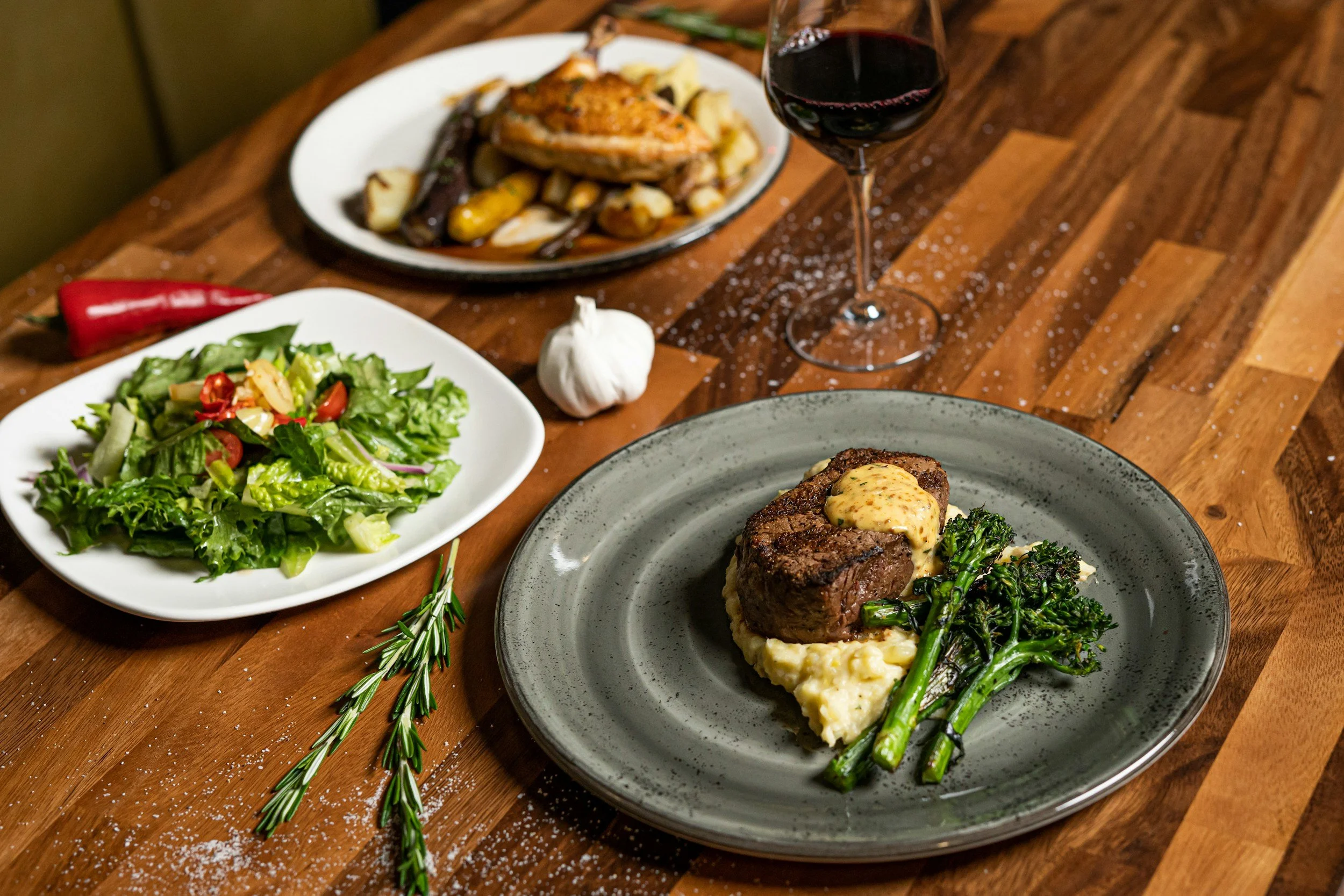
The filet mignon comes from the tenderloin, a long, narrow muscle that runs along the spine. This muscle does almost no work during the animal’s life, which is why filet mignon is famously tender. Butchers often call it the most forgiving cut to cook, because its fine grain and low connective tissue make it exceptionally soft.
Fun butcher fact: the entire tenderloin accounts for less than 2 percent of the whole animal, which is why filet mignon has always been associated with luxury and special occasions.
Filet mignon is about subtlety. It is not loud or bold, but clean, delicate, and refined. At Meaty Eats, our butchers look for tenderloins with a smooth texture and consistent thickness, ensuring even cooking and an elegant final plate.
How to Cook Filet Mignon Like a Chef
Bring the steak to room temperature for at least 30 minutes. Pat it dry thoroughly. Season with kosher salt and freshly cracked black pepper just before cooking. Heat a cast iron pan until very hot, add a neutral oil, and sear the filet on all sides until a golden crust forms.
Lower the heat slightly and add butter, smashed garlic, and thyme. Baste continuously for flavour. Cook to medium rare, around 130 to 135 F, then rest for 5 to 7 minutes.
Finishing Touches and Pairings
Finish with a pinch of flaky sea salt or fleur de sel and a light drizzle of high quality extra virgin olive oil or white truffle infused olive oil.
Wine pairing works best when it mirrors the elegance of the cut. Pinot Noir, a softer Bordeaux blend, or even Champagne complement filet mignon beautifully.
Side Suggestions
Think refined and restrained. Creamy mashed potatoes, roasted baby carrots with honey and thyme, or a simple green bean almondine. Let the steak remain the centre of the plate.
Plate by slicing into thick medallions and fanning gently. Keep the plate clean and minimal for a true steakhouse look.
2. Rib Eye, The Butcher’s Favourite
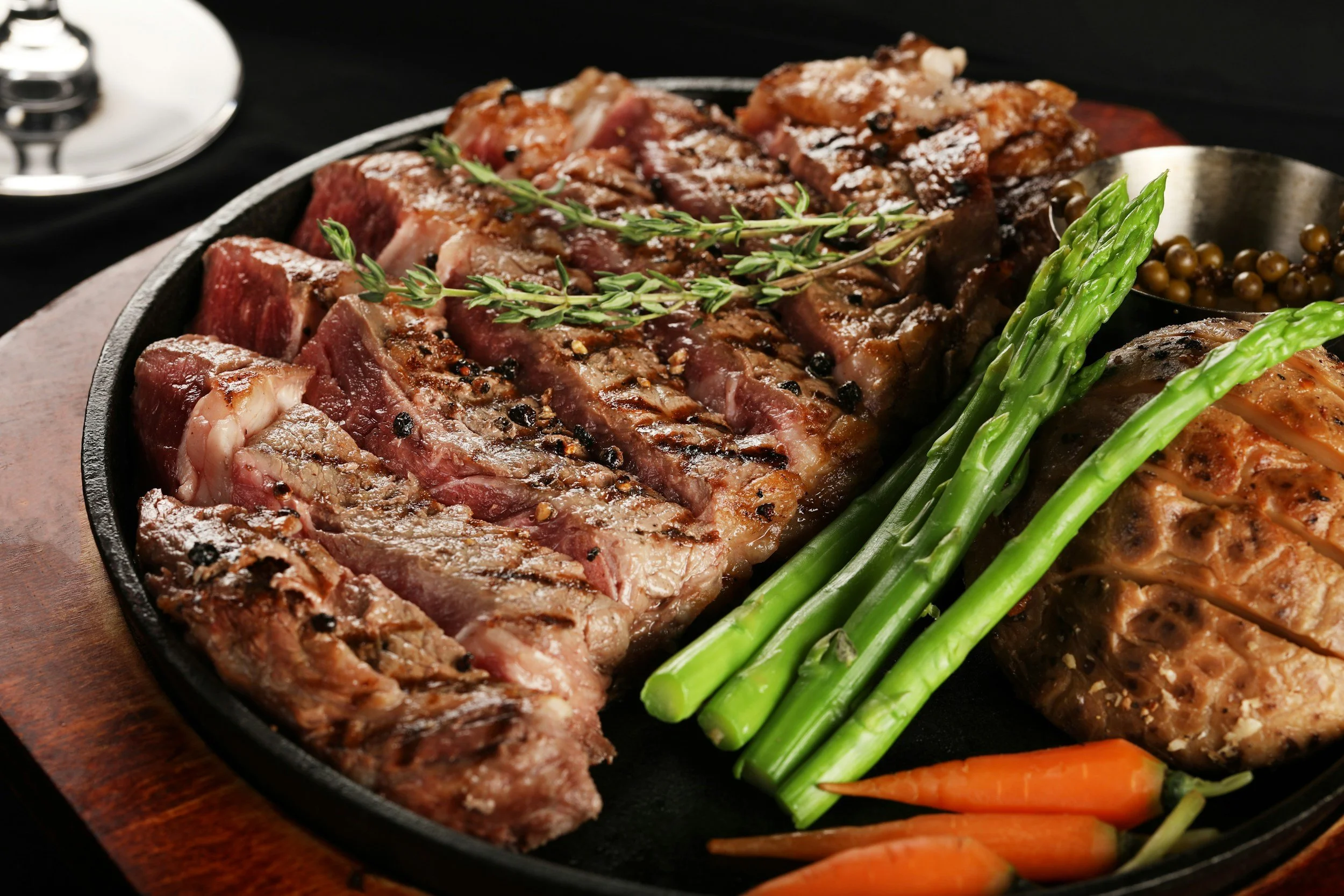
If you ask a butcher what they would cook for themselves, many will say rib eye. This cut comes from the rib section, an area known for natural movement and exceptional marbling. That marbling is what gives rib eye its rich flavour and juicy texture.
Butcher insight: rib eye contains multiple muscles, including the prized spinalis, often called the rib eye cap. This is considered one of the most flavourful muscles on the entire animal.
Rib eye is bold, indulgent, and unapologetically beefy. At Meaty Eats, we select rib eyes with even fat distribution so the steak bastes itself as it cooks.
How to Cook Rib Eye Like a Steakhouse
Bring to room temperature and season generously with salt. Rib eye benefits from early seasoning, allowing the salt to penetrate the meat. Sear in a hot pan or grill, letting the fat render slowly. Flip only when a deep crust forms.
Finish with butter and rosemary. Aim for medium rare, about 130 to 135 F, to allow the marbling to melt without overcooking.
Finishing Touches and Pairings
Finish with smoked sea salt or flaky Maldon salt and a drizzle of robust extra virgin olive oil or rosemary infused olive oil.
Pair rib eye with structured red wines like Cabernet Sauvignon, Malbec, or Syrah that can stand up to its richness.
Side Suggestions
Rib eye loves contrast. Crispy roasted potatoes, grilled asparagus, sautéed mushrooms, or a sharp arugula salad with lemon vinaigrette balance the richness.
Serve whole or sliced against the grain, spooning pan butter over the steak just before serving.
3. New York Strip, Classic Steakhouse Tradition
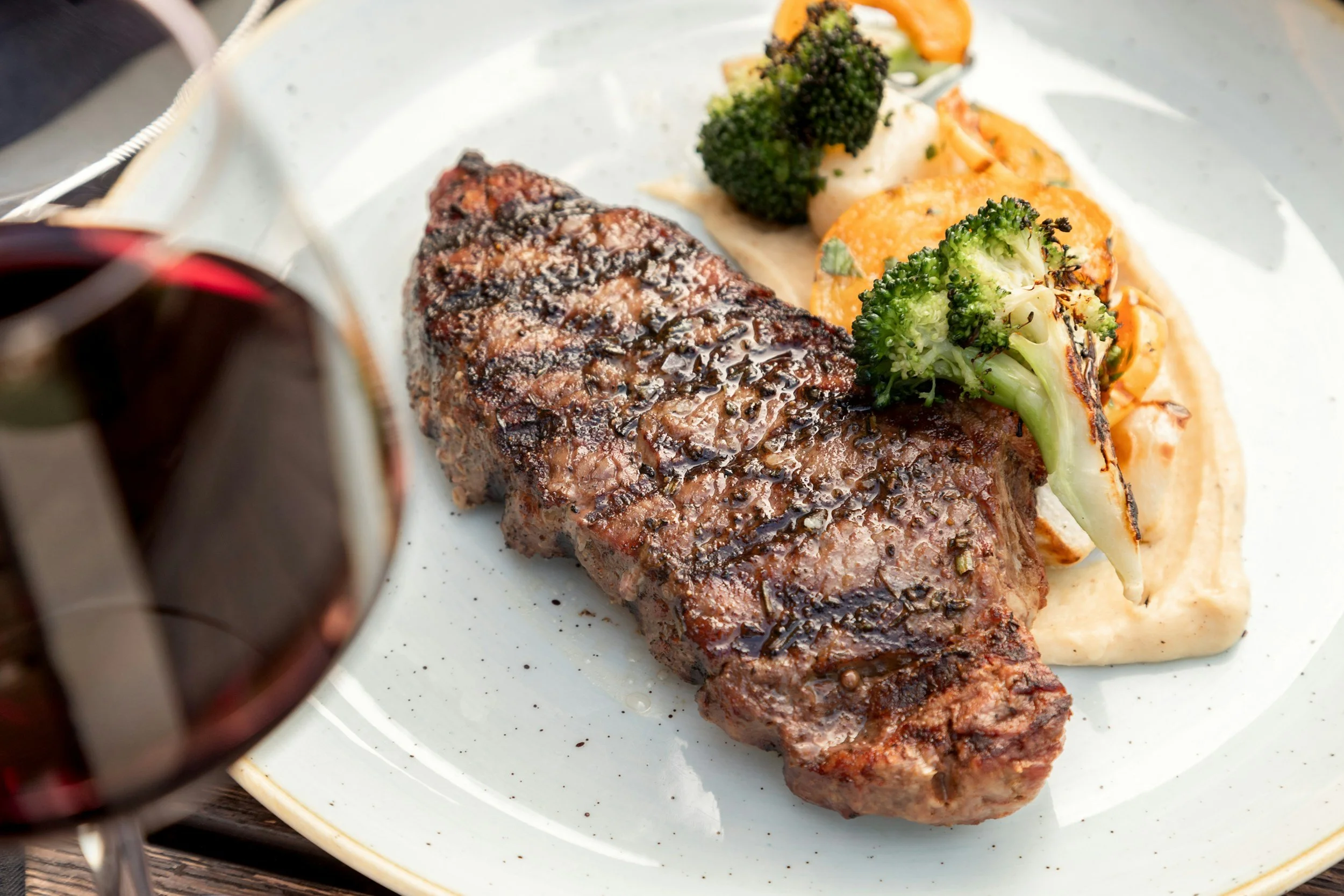
The New York strip comes from the short loin, one of the most prized sections of the animal. Historically, this cut became famous in classic American steakhouses for its balance of tenderness and flavour.
Fun history note: the New York strip is also known as the Kansas City strip or sirloin strip, depending on regional traditions.
This cut has a firmer texture than rib eye, with a clean beef flavour and a beautiful fat cap that crisps up when cooked properly. Our butchers love this cut for its consistency and striking presentation.
How to Cook New York Strip Like a Pro
Pat the steak dry thoroughly to encourage a strong crust. Season simply. Sear hard in a hot pan, then finish in the oven if needed for thicker cuts.
Cook to medium rare, around 130 to 135 F, and rest well to retain juices.
Finishing Touches and Pairings
Finish with cracked sea salt or black lava salt and a drizzle of peppery extra virgin olive oil.
Wine pairings include Merlot, Rioja, or Super Tuscan blends that offer balance and depth.
Side Suggestions
New York strip pairs beautifully with steakhouse classics like creamed spinach, roasted garlic potatoes, or grilled broccolini.
For plating, slice into thick strips and align neatly on the plate. Garnish with roasted shallots or garlic for a polished finish.
4. Tomahawk Steak, A Celebration Cut
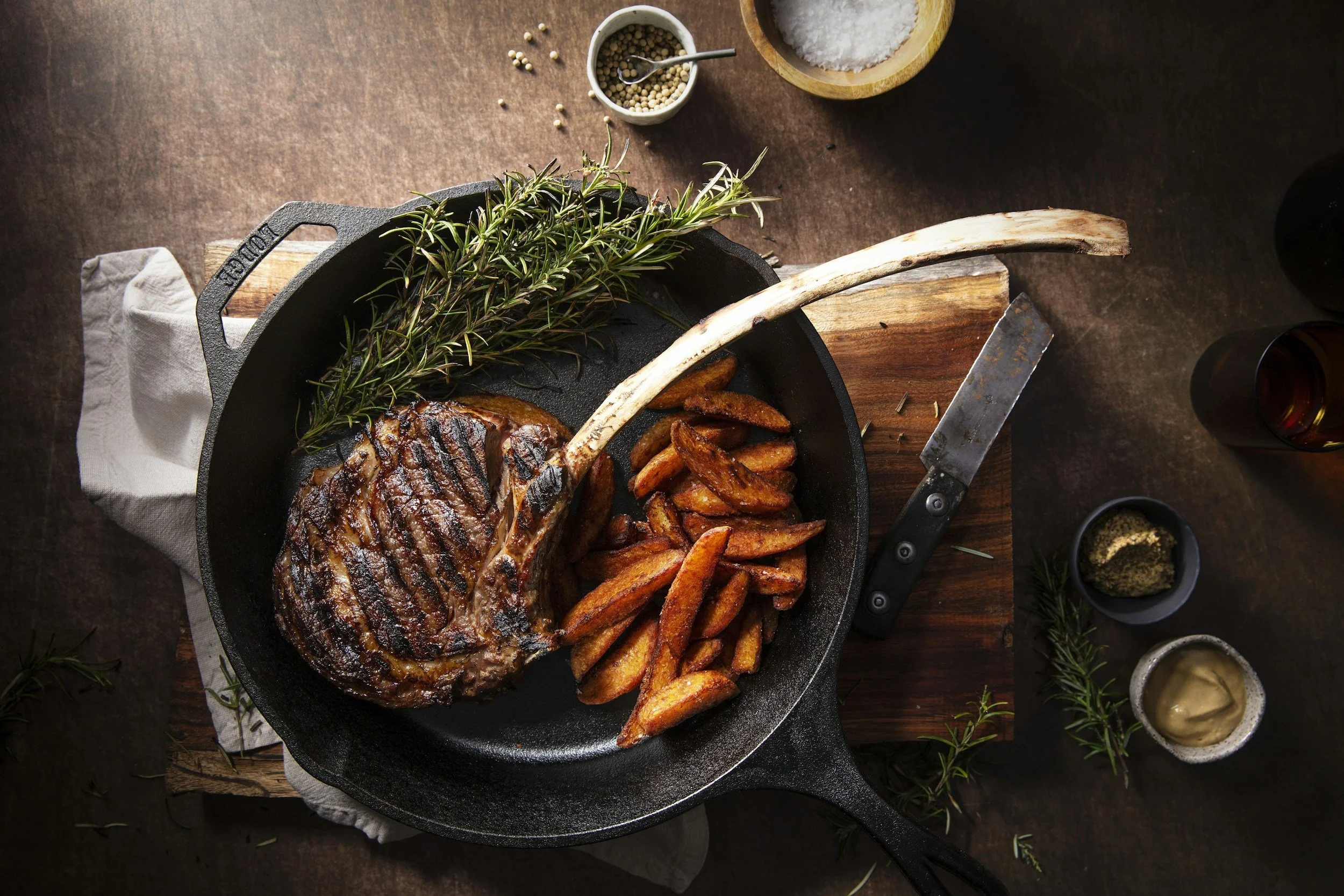
The tomahawk steak is a rib eye left on the bone, with the rib bone frenched for dramatic presentation. Historically, bone in cuts were prized for their flavour and insulation during cooking, long before presentation became part of the appeal.
Butcher fun fact: the long bone helps regulate heat, allowing the meat to cook more evenly while adding depth of flavour.
This is the steak for shared moments, celebrations, and tables filled with laughter.
How to Cook a Tomahawk at Home
Because of its size, a reverse sear works best. Season generously and cook slowly over indirect heat or in a low oven until just below medium rare. Finish with a hot sear to develop a deep crust.
Rest for at least 10 minutes before slicing.
Finishing Touches and Pairings
Finish with smoked Maldon salt or herb finishing salt and a drizzle of bold extra virgin olive oil or garlic infused olive oil.
Pair with powerful wines such as Cabernet Sauvignon, Brunello di Montalcino, or Barolo.
Side Suggestions
Serve family style with roasted potatoes, charred vegetables, or a fresh chopped salad. This cut invites sharing.
Carve tableside, arrange slices around the bone on a large platter, and finish with herbs and olive oil for drama.
Why Choose Dry Aged Beef
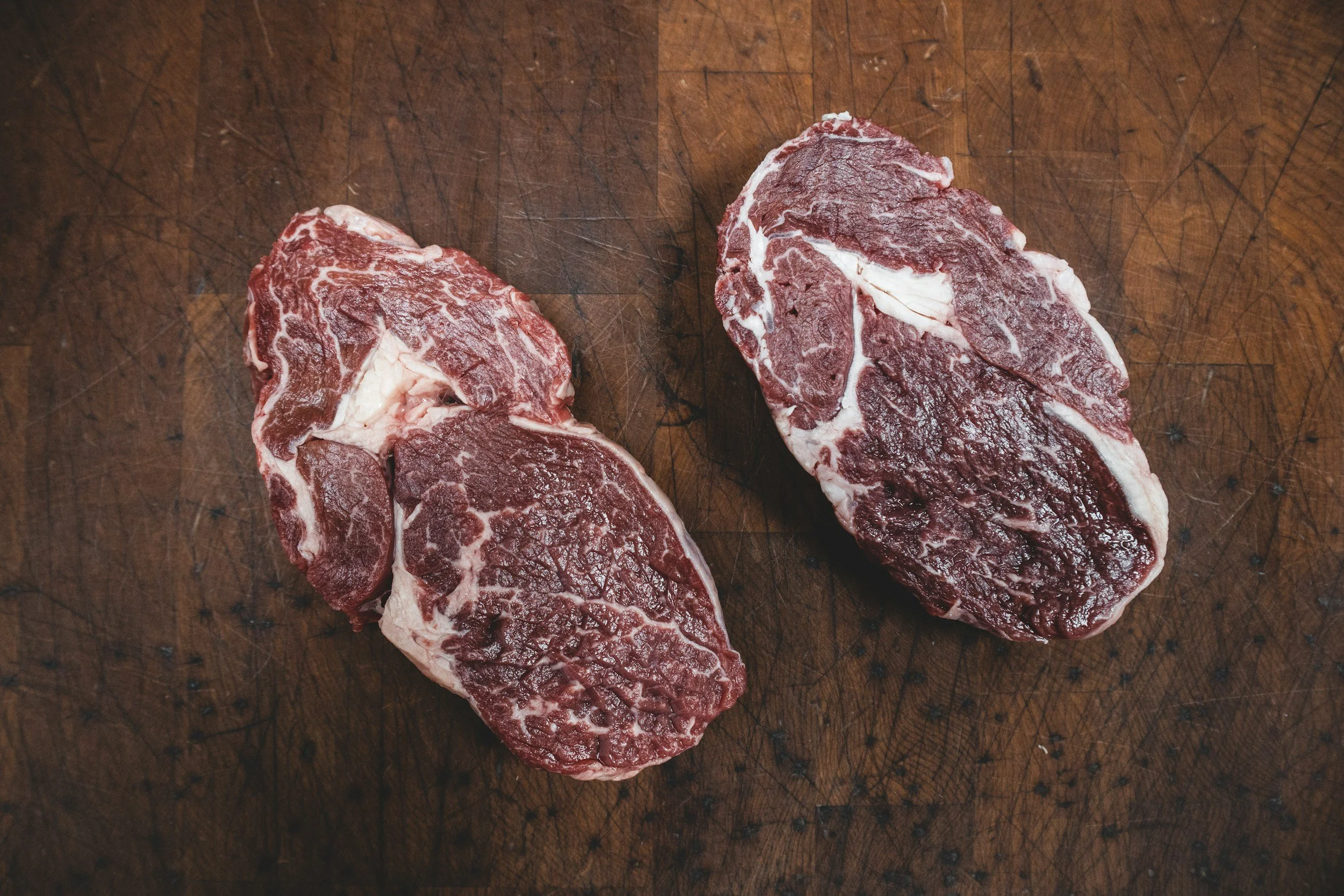
Some of our most passionate conversations happen around dry aging. Dry aged beef is not about trend or price. It is about patience, craftsmanship, and flavour development.
Dry aging is a traditional process where whole cuts of beef are carefully stored in a temperature and humidity controlled environment for several weeks. During this time, natural enzymes break down muscle fibers, increasing tenderness, while moisture slowly evaporates from the meat. The result is a steak that is more concentrated in flavour, with deeper savoury notes and a luxurious texture.
Butcher insight: dry aging enhances what is already there. That is why it only works with high quality beef. Ontario pasture raised cattle with proper fat coverage develop complex flavours like nuttiness, umami, and subtle sweetness as they age.
Dry aged steaks cook differently and reward attention. Because moisture has evaporated, they sear faster and develop an exceptional crust. They also require simpler seasoning. Salt, pepper, and a hot pan are often all that is needed.
Dry aged rib eyes and New York strips are especially prized for their depth of flavour, while dry aged filet offers a richer, more rounded expression of its natural tenderness.
Choose dry aged beef when the meal is about celebration, when you want something memorable, and when you want to experience steak at its most expressive.
The Meaty Eats Philosophy
Great steak does not need to be complicated. It needs quality, respect, and care. Bring your steaks to room temperature, season thoughtfully, use a thermometer, and always allow time to rest.
We believe that when you start with Ontario pasture raised beef and expert butchery, cooking at home becomes an experience worth celebrating. Every steak tells a story. We are proud to be part of yours.