
Sourdough at Meaty Eats: A Tradition Brought to Life
Sourdough is more than just bread to us. It is a living food, a tradition passed down through generations, and something we take pride in doing properly.
Our sourdough starter is decades old and comes from Italy. It has been kept in the family for generations, fed daily, and carefully maintained to keep the living culture healthy. Every loaf we bake carries that history forward.
What Makes Our Sourdough Different
True sourdough relies on natural fermentation rather than commercial yeast. Our starter is a naturally occurring culture of wild yeast and beneficial bacteria. When mixed with flour and water, it slowly ferments the dough, developing flavour, structure, and digestibility over time.
We use only organic ingredients in our sourdough. That means organic flour, water, and salt. No additives, no dough conditioners, and no shortcuts.
We currently bake:
Classic sourdough
Rye sourdough
Seeded sourdough
Whole wheat sourdough
Each loaf begins with our Italian-born starter, which then develops its own unique characteristics based on the type of bread it is transformed into.
Organic Flour vs Conventional Flour: Why It Matters
Flour is the foundation of sourdough, and the type of flour used directly affects fermentation, structure, and flavour.
Organic flour is milled from wheat grown without synthetic pesticides, herbicides, or chemical fertilizers. Because it is less aggressively processed, organic flour often retains more of the grain’s natural nutrients and character. This creates a healthier environment for wild yeast and beneficial bacteria to thrive during long fermentation.
Conventional flour is often processed for speed and uniformity at scale. While consistent, conventional flour can be less expressive in sourdough baking, leading to faster fermentation but less depth of flavor.
Since switching fully to organic flour, we have noticed immediate improvements in our sourdough. The dough ferments more consistently, develops a better structure, achieves a stronger rise, and produces a more distinct and complex flavor. Simply put, the bread feels more alive.
The Science of Fermentation and Gut Health
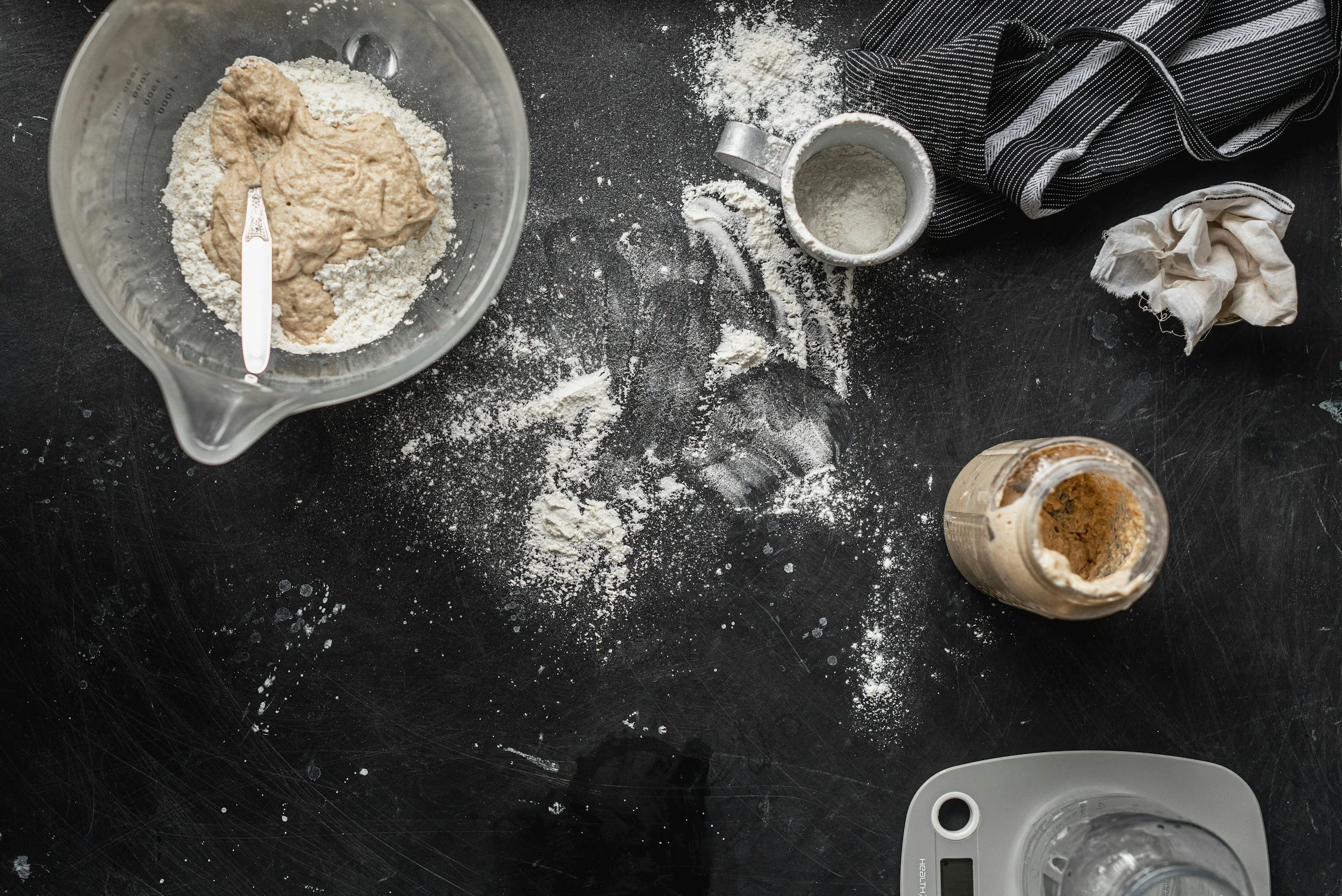
Sourdough is a fermented food, and research continues to explore the connection between fermented foods, gut health, and overall well-being.
During long fermentation, beneficial bacteria break down complex carbohydrates, proteins, and phytic acid. This changes the molecular structure of gluten and can make sourdough easier to digest for many people compared to conventional bread.
Sourdough is not gluten-free, but many individuals who experience discomfort with regular bread report fewer issues when eating properly fermented sourdough. This is an active area of food science and gut health research and one of the reasons traditional fermentation has endured for centuries.
Understanding the Crust
A proper sourdough crust should be firm, aromatic, and deeply colored. That crackle when you squeeze the loaf is a sign of correct fermentation and baking.
The crust forms as natural sugars develop during fermentation and caramelize in the oven. A darker crust does not mean burnt. It usually means more flavour. A well-developed crust also protects the interior of the bread and naturally extends shelf life without preservatives.
Reading the Inside
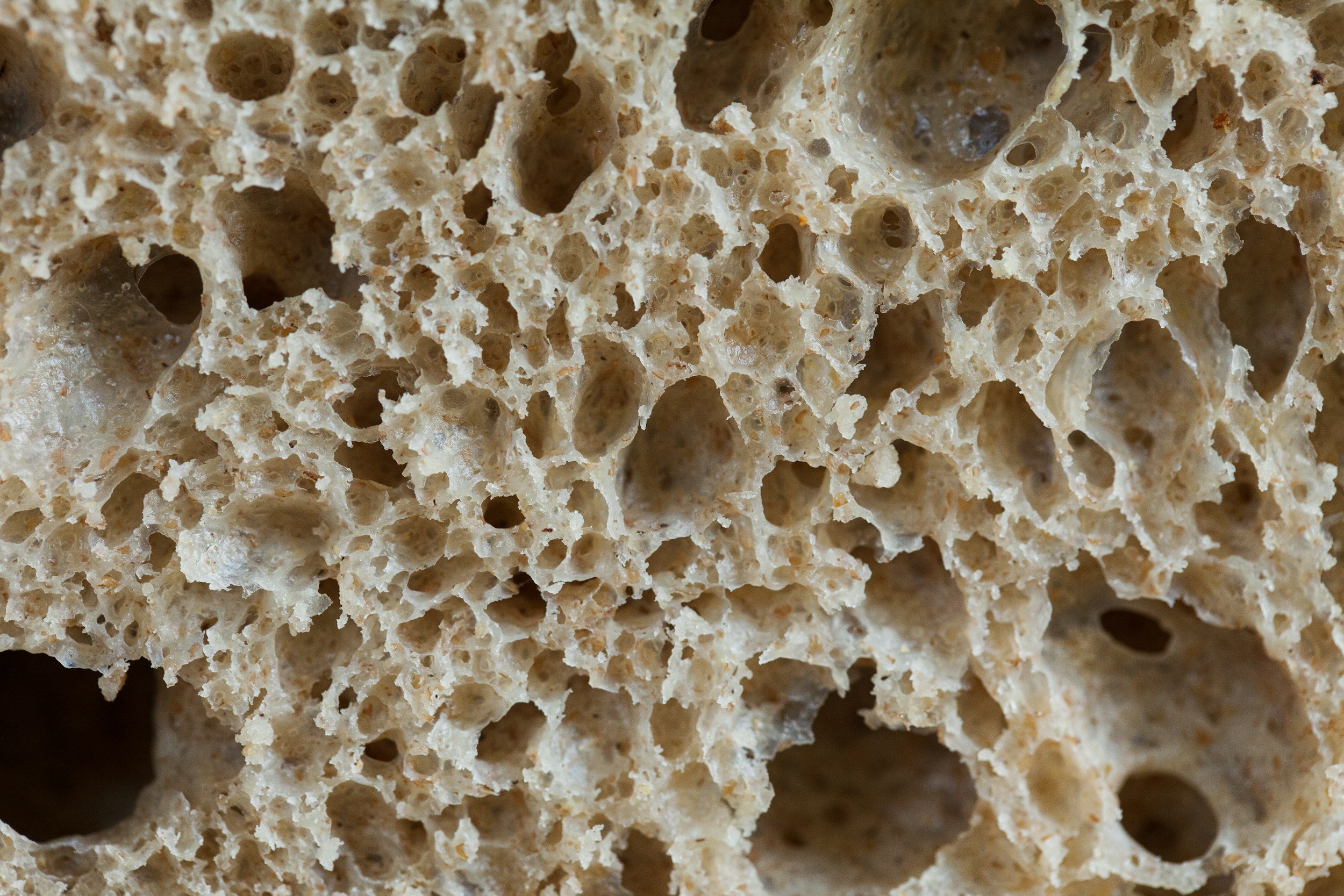
The inside of sourdough, known as the crumb, tells the story of fermentation.
An open, irregular crumb indicates good fermentation and hydration
A slightly glossy interior shows slow, even fermentation
A tighter crumb is expected in rye and whole wheat sourdoughs
Each flour behaves differently, and real sourdough reflects that honestly.
The Natural Color of Sourdough
Color variation is a hallmark of traditionally made bread.
Classic sourdough has a light to golden interior
Whole wheat sourdough shows deeper beige and brown tones
Rye sourdough appears darker and more earthy
Seeded sourdough displays contrast from grains and seeds throughout the loaf
These colors come from the grain itself, not bleaching or additives. Variation is expected and welcomed.
How We Pack Our Bread and How to Store It at Home
Our sourdough is packed in a paper bag to transport it home in an environmentally responsible way. Paper allows the bread to breathe and helps protect the crust during short trips. Plastic bags are available at the bakery with every purchase if requested.
Once home, storage makes a big difference. We recommend the use of a bread box. For short-term storage, remove the bread from the paper bag and keep it at room temperature. Store it cut-side down on a cutting board or wrap it loosely in a clean kitchen towel or paper. Avoid plastic bags, which trap moisture and soften the crust.
How to Slice Your Sourdough
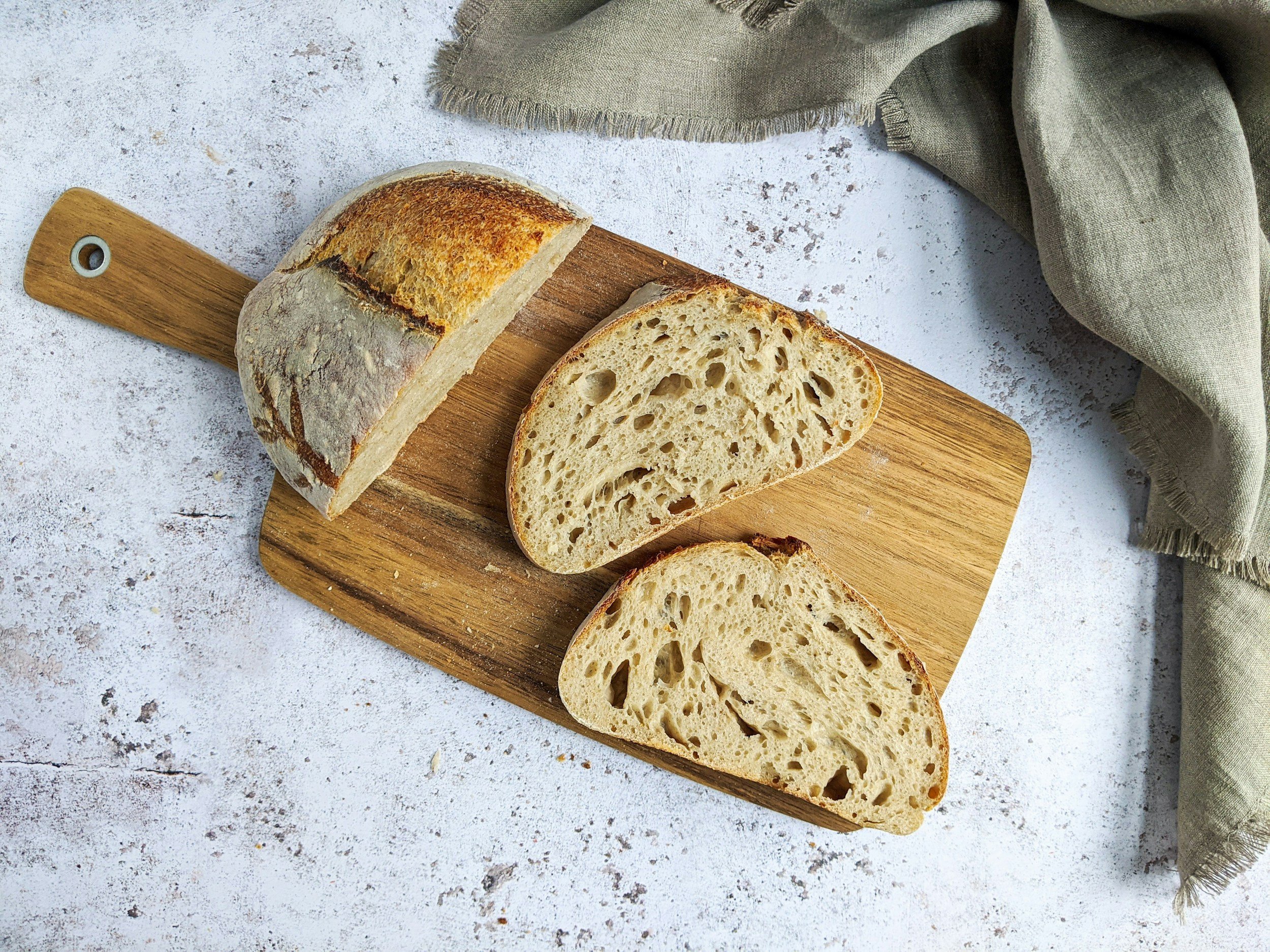
Always allow sourdough to cool completely before slicing. Cutting too early releases steam and compresses the crumb, making the interior gummy.
Use a sharp serrated knife and let the blade do the work. For round loaves, slicing from the center outward helps keep the remaining bread fresher longer.
Freezing Sourdough the Right Way
If you plan to keep sourdough for more than a couple of days, freezing is the best option. Sourdough freezes very well when handled properly.
To freeze:
Allow the loaf to cool completely
Slice before freezing for easy use
Place slices or the whole loaf in an airtight bag or container
Freeze as soon as possible to preserve freshness
Slices can be toasted directly from frozen. Whole loaves can be thawed at room temperature, then reheated briefly in the oven to revive the crust.
Bread Made With Intention
Because our sourdough is naturally fermented and baked in-house, no two loaves are exactly the same. That variation is not a flaw. It is proof of real food made by hand, guided by time, temperature, and care.
When you choose sourdough from Meaty Eats, you are choosing bread with history, science, and intention behind it. If you ever have questions about our starter, fermentation, or baking process, we are always happy to share.