
How to Build the Perfect Charcuterie Board at Home
Charcuterie boards are more than just a trend. They are a centuries-old tradition rooted in the art of preparing and enjoying meats and cheeses. The word charcuterie comes from French and originally referred to a shop specializing in cured meats. Over time, it evolved into a beautiful way to entertain, combining flavors, textures, and colors that delight both the eyes and the palate.
Making your own charcuterie board at home is a rewarding experience. It allows you to select ingredients that suit your taste, try unique combinations, and create a centerpiece that sparks conversation. Unlike pre-made platters, building your own board gives you control over quality, portion sizes, and presentation. It also adds a personal touch that makes any gathering feel special.
Step 1: Choose a Variety of Cheeses
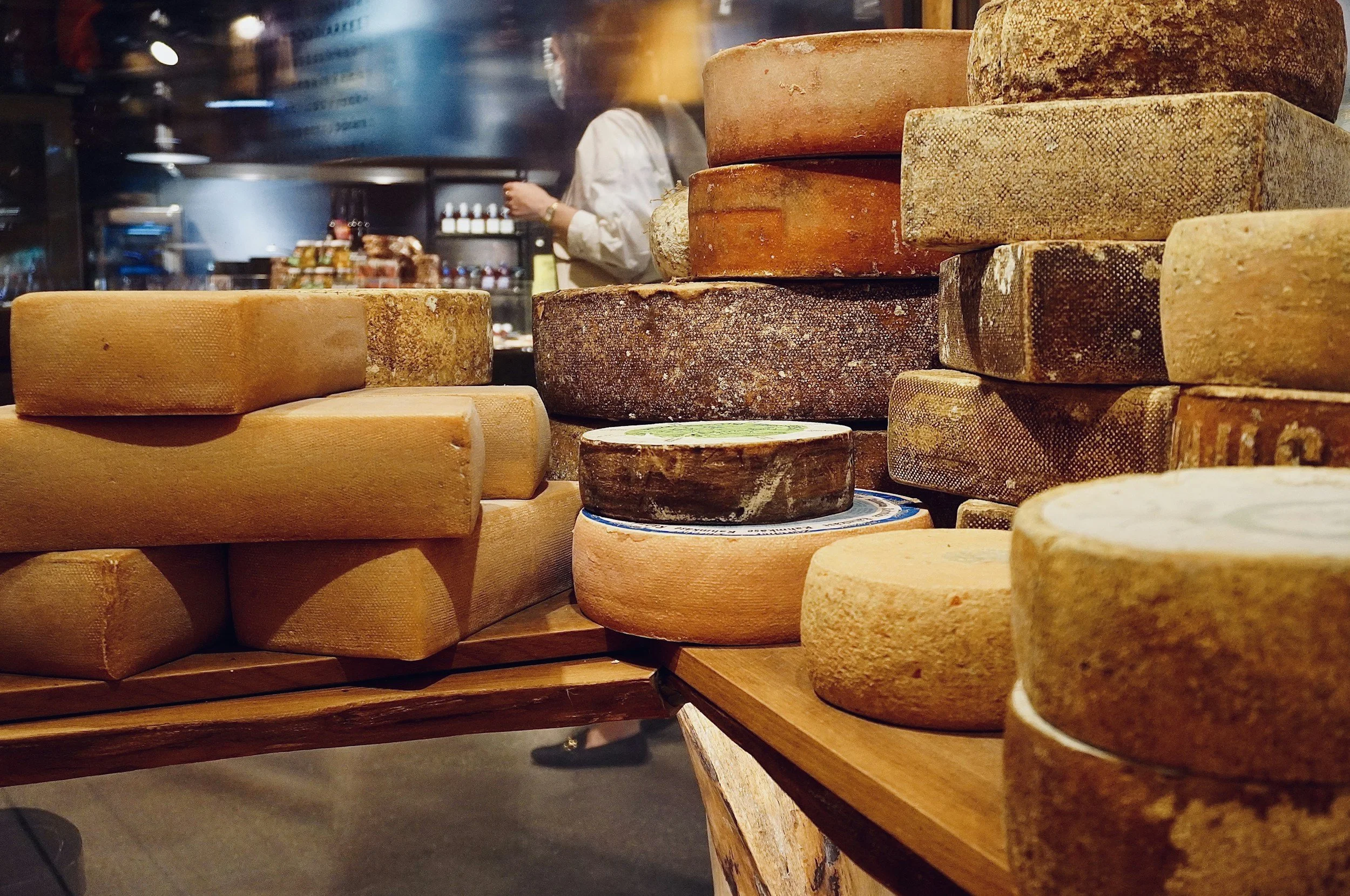
Cheese is the foundation of a charcuterie board. Include a range of textures and flavors to keep every bite interesting.
Bellavitano Merlot offers a firm, slightly crumbly texture with nutty notes and a hint of wine.
Formaggio dei Frati Picco-Croto adds a rustic Italian flavor with a semi-firm bite.
Oveja Trufado Curado Sheep Milk Cheese is earthy and luxurious with a subtle truffle aroma.
Extra Creamy Blue Cheese provides bold flavor and smooth richness that pairs well with sweeter items.
Cheddar with Caramelized Onion delivers gentle sweetness and a familiar, comforting taste.
Cut some cheeses into wedges, some into cubes, and leave a few in slices. This variety in shape adds visual appeal and makes serving easier.
Step 2: Select Cured Meats
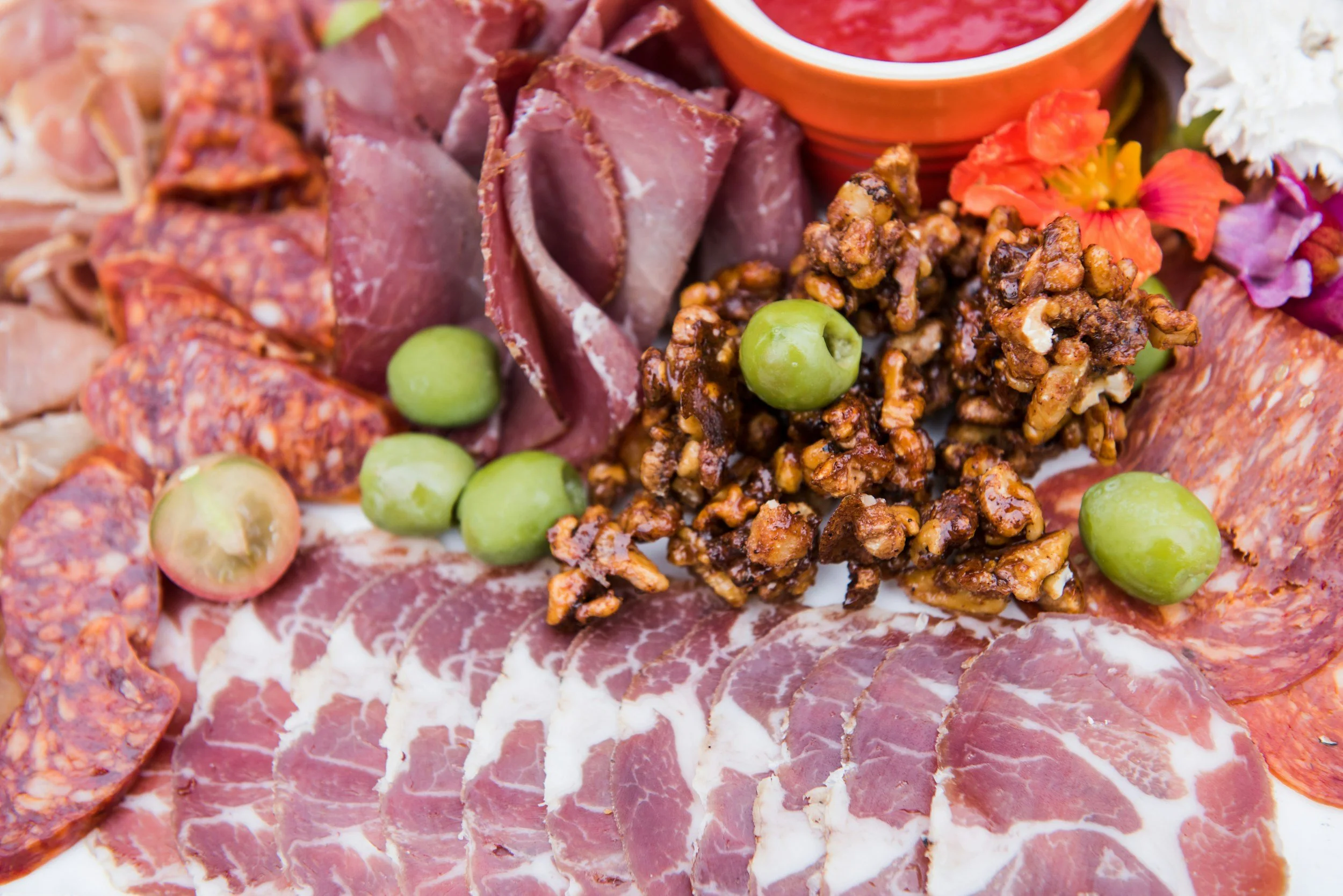
Cured meats bring richness and salt that balance the cheeses.
Prosciutto Speck is lightly smoked and delicate, ideal for folding or draping.
Coppa Mild has a tender texture and gentle spice.
Baby Glazed Ham adds a touch of sweetness and heartiness.
Arrange the meats loosely. Folding or rolling slices gives the board volume and a sense of abundance.
Step 3: Add Sweet and Savory Accents
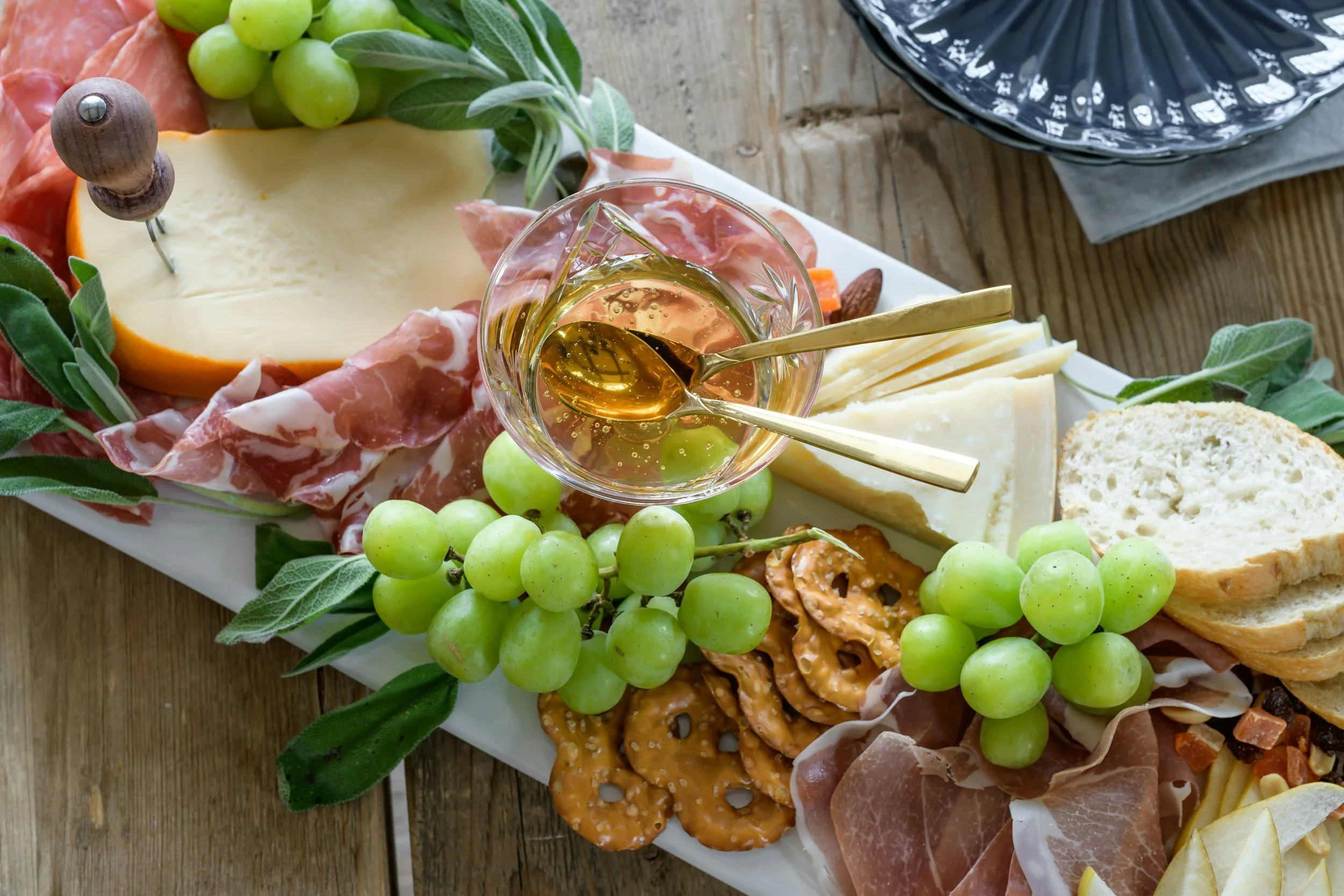
Accents bring balance and color. They also create pairing opportunities that enhance flavors.
Fig Preserve pairs beautifully with blue cheese, sheep milk cheese, and aged cheddar.
Mediterranean Antipasto Salad adds acidity, herbs, and olive oil richness that cuts through heavier flavors.
Organic Dried Cranberries give a pop of sweetness and a chewy texture that complements firm cheeses.
You can serve spreads and antipasto in small bowls or tuck them around the board for visual interest.
Step 4: Pairing and Substitutions
Pairing is about contrast. Soft cheeses work well with firmer or saltier meats. Sweet preserves balance stronger cheeses like blue or truffled sheep milk cheese. Nuts, fresh fruit, or dried fruit can substitute if you want extra sweetness or crunch. If you do not have one of the cheeses, you can replace it with a similar texture and flavor. For example, a mild brie can replace creamy blue cheese for a gentler profile, or a smoked gouda can take the place of prosciutto speck.
Step 5: Assemble the Board
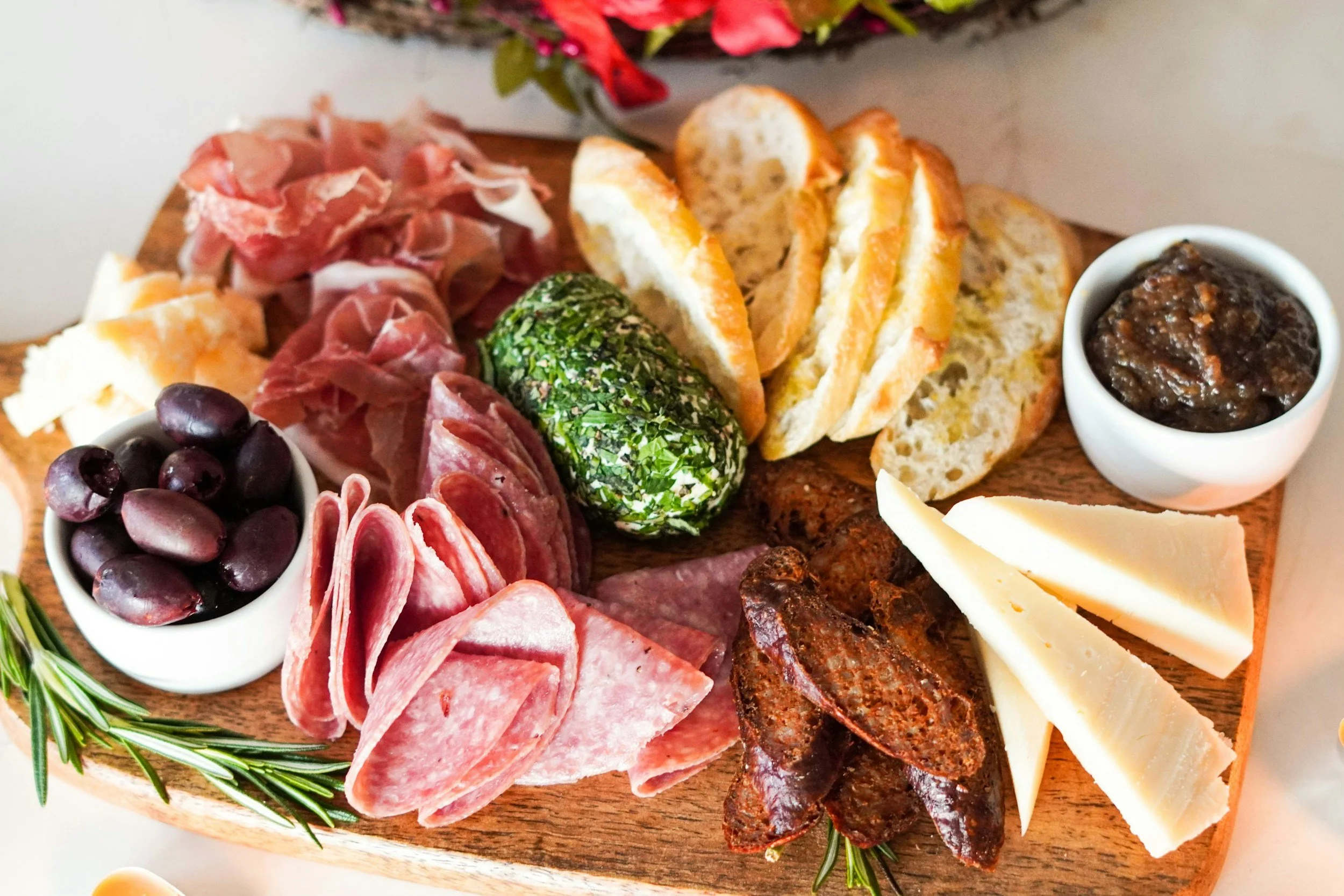
Start by placing cheeses evenly across your board. Add meats next, folding and rolling slices for height. Fill gaps with small bowls of preserves or antipasto, and scatter dried cranberries or other small accents for color and texture. Leave some open space so each element is highlighted.
Step 6: Serve and Enjoy
Allow the board to sit at room temperature for about 20 minutes before serving. This brings out the full flavors of the cheeses. Serve with fresh bread or crackers and let everyone explore the combinations.
Making your own charcuterie board is not just about food. It is an experience. Each ingredient, color, and texture tells a story. With a thoughtful selection of cheeses, meats, and accents, your board becomes a centerpiece that invites conversation and creates memories.