
Taking Care of Kitchen Knives: Types, Uses, and Best Practices
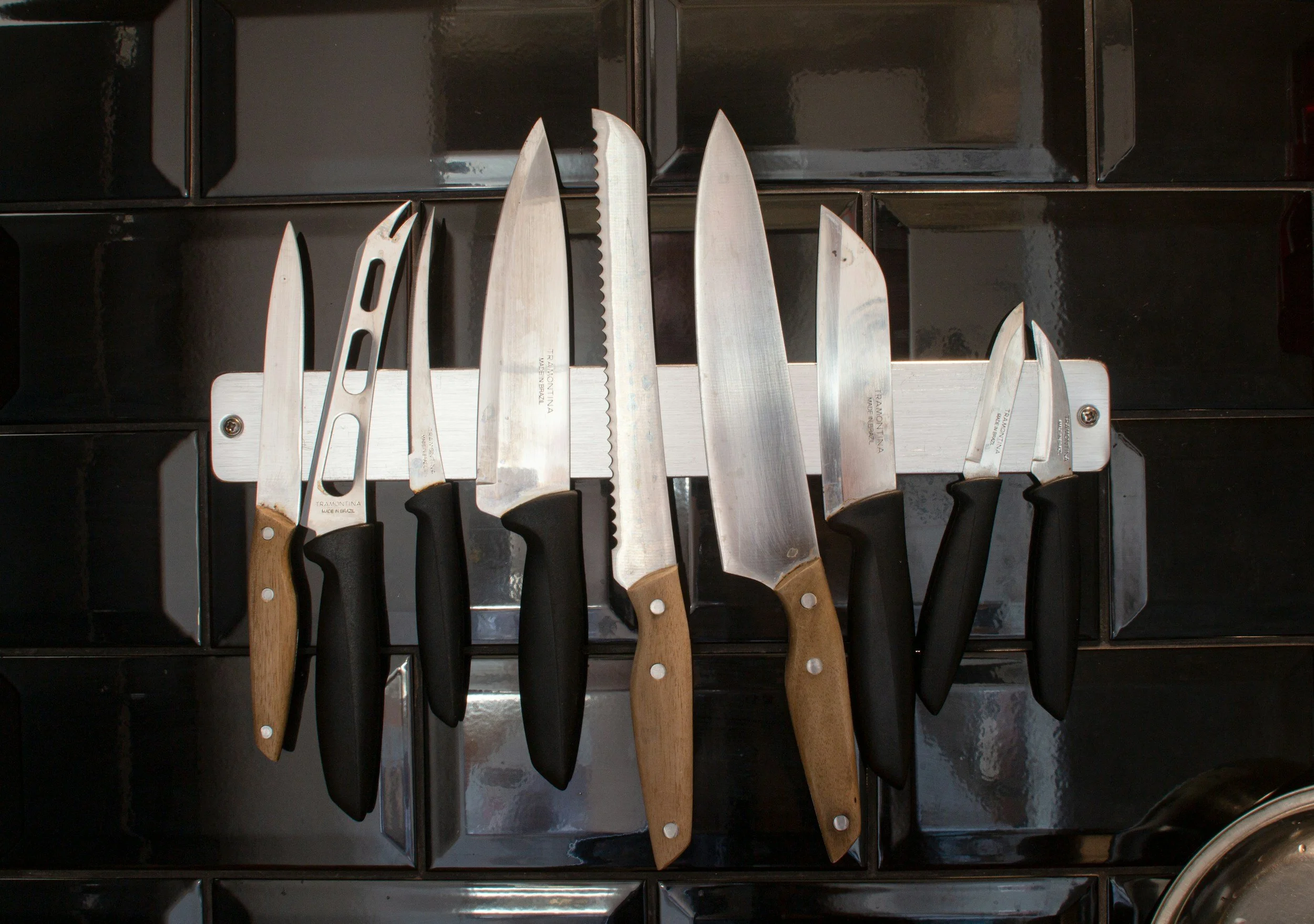
A good knife is one of the most valuable tools in the kitchen. It affects not only how efficiently you cook, but also how safe and enjoyable food preparation feels. Proper knife care goes beyond sharpening. It includes choosing the right knife for the task, storing it correctly, and developing habits that protect both the blade and the user. With the right practices, a quality knife can last a lifetime.
Understanding Different Types of Kitchen Knives
Most kitchens rely on a small set of essential knives, each designed for specific tasks. The chef’s knife is the most versatile and widely used. Typically ranging from 8 to 10 inches, it is designed for chopping, slicing, and dicing vegetables, herbs, and proteins. Its curved blade allows for a rocking motion that makes repetitive prep work easier and more efficient.
The paring knife is much smaller and intended for precision tasks. It is ideal for peeling fruit, trimming vegetables, and handling detailed work where control matters more than power. Because of its size, it should not be used for heavy cutting or hard foods.
The serrated knife, often called a bread knife, features a saw-like edge that grips and cuts through crusty bread, tomatoes, and delicate foods without crushing them. Serrated knives do not require frequent sharpening, but they should still be handled with care to avoid dulling the teeth.
A boning knife is designed for working with meat and poultry. Its narrow, flexible blade allows it to glide along bones and joints, making it easier to separate meat cleanly. Using a boning knife for its intended purpose reduces strain on larger knives and improves precision.
Specialty knives such as cleavers, slicing knives, or santoku knives serve more specific roles. While they are not essential for every home cook, they can make certain tasks easier when used correctly.
Using the Right Knife for the Job
One of the most important aspects of knife care is using the correct knife for each task. Using a paring knife to chop large vegetables or a chef’s knife to pry apart bones puts unnecessary stress on the blade and increases the risk of chipping or injury. Knives should never be used to scrape food off a cutting board with the edge. Instead, the spine of the blade should be used to preserve sharpness.
Cutting surfaces also matter. Knives should always be used on wood, rubber, or high-quality plastic cutting boards. Hard surfaces like glass, marble, granite, or ceramic will quickly dull a blade and can cause micro-damage to the edge.
Cleaning and Daily Care
Knives should be washed by hand immediately after use with warm water and mild dish soap. Leaving knives in a sink filled with water increases the risk of accidents and can cause corrosion, especially with carbon steel blades. Dishwashers should be avoided, as the heat, moisture, and detergents can damage both the blade and the handle.
After washing, knives should be dried thoroughly before storing. Even stainless steel knives benefit from being kept dry, as moisture can lead to staining or rust over time.
Sharpening and Honing
Sharp knives are safer than dull ones because they require less force and offer better control. Honing and sharpening serve different purposes. Honing realigns the edge of the blade and should be done regularly, especially for frequently used knives. Sharpening removes material from the blade to create a new edge and is needed less often.
Home cooks can sharpen knives using whetstones, manual sharpeners, or professional sharpening services. The frequency of sharpening depends on how often the knife is used and the type of steel. Paying attention to how the knife performs is the best indicator of when sharpening is needed.
Proper Storage
How knives are stored has a direct impact on their condition and safety. Storing knives loose in a drawer can dull the blade and increase the risk of injury. Knife blocks, magnetic strips, or blade guards help protect the edge and keep knives accessible. When using a magnetic strip, the spine of the knife should be placed against the magnet first, then rotated into place to avoid chipping.
What We Recommend
We recommend investing in a small collection of high-quality knives rather than many low-quality ones. A chef’s knife, boning knife, paring knife, and serrated knife will cover all kitchen tasks. Knives should always be used on appropriate cutting boards, made of materials that will not damage the edge such as sugar maple, cleaned by hand, and stored safely.
Regular honing, occasional sharpening, and mindful use will dramatically extend the life of a knife. Treated with care, a good knife becomes an extension of the cook’s hand, making cooking safer, faster, and far more enjoyable.